When someone struggles with a personality disorder, the pain doesn’t stay isolated. It spills into relationships - especially the closest one. Partners often become the emotional anchor, the crisis responder, the silent sufferer. But what if that partner could be part of the healing process? Not as a therapist, not as a cure, but as a supported, informed ally. The answer isn’t simple. It’s messy, emotional, and deeply personal. Yet for many, especially those dealing with borderline personality disorder (BPD), involving the partner in therapy isn’t just helpful - it can be life-changing.
Co je vlastně zapojení partnera do terapie?
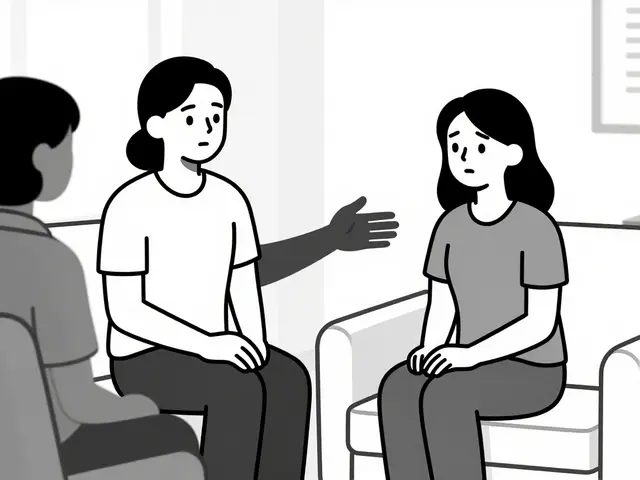
This isn’t couples therapy. It’s not about fixing the relationship. It’s about edukace. In the Czech Republic, since 2020, centers like the National Institute of Mental Health in Klecany have run structured programs for partners of people with BPD. These aren’t therapy sessions for the partner. They’re educational workshops. Think of them as crash courses in understanding what’s really going on inside someone with BPD - the fear of abandonment, the emotional storms, the intense mood swings. Partners learn how to respond without fueling the fire, how to set boundaries without sounding cruel, and how to protect their own mental health while staying present.
For example, one common tool taught is the “time-limited reaction.” When your partner spirals into rage or despair, instead of reacting immediately, you pause. You say, “I hear you. I need 20 minutes to calm down, then we’ll talk.” This simple pause breaks the cycle of escalation. It’s not cold. It’s protective. And it’s taught in 5-week cycles, often held weekly at 5:30 p.m. at Klecany. Attendance is high - the waiting list is 4 to 6 weeks long. That tells you something: demand is real.
Kdy to funguje nejlépe?
Not all personality disorders are the same. The biggest evidence for partner involvement comes from BPD. Why? Because 85% of people with BPD live with an overwhelming fear of being left alone. That fear triggers panic, accusations, self-harm, desperate pleas. When the partner understands this isn’t manipulation - it’s terror - the dynamic shifts. Studies from Psycholog AdiCare (2022) show that when partners are educated and involved, there’s a 40% drop in self-destructive behaviors and a 30% improvement in emotional regulation for the person with BPD.
But it doesn’t work the same way for narcissistic personality disorder. In fact, experts like Dr. Julie Gottman warn that two narcissists in a relationship don’t create harmony - they create a transactional performance. Each gives just enough to keep the other hooked. No real intimacy. No healing. So if your partner has traits of narcissism, involving them in therapy is unlikely to help. The focus should be on your own safety, not joint healing.
Co se děje v hlavě partnera?
Most partners start out exhausted. They’re constantly walking on eggshells. They apologize for things they didn’t do. They cancel plans because “they’re not in a good place.” They lose friends because the relationship takes all their energy. The emotional toll is real. That’s why many programs now include individual therapy for partners - about 1,200 Kč per hour on average. It’s not optional. It’s essential.
One woman from Prague, “Jana, 34,” shared in a Lifecoaching.cz survey: “I learned not to take aggression personally. I stopped trying to fix it. I just held space. We survived three crises without breaking up.” Her story is common. But there’s another side. 27% of respondents in the same survey said partner involvement made things worse. Why? Because some partners learned the techniques - and used them to control. One man from Brno, “Petr, 42,” said: “My partner learned how to use my boundaries against me. Instead of healing, I got more manipulation.”
This is why screening matters. A good therapist checks: Is the partner emotionally stable? Do they have their own trauma? Are they trying to “fix” their partner to feel better about themselves? If yes, then involving them too early can backfire. The partner may need their own therapy first.
Co se učí v edukačních programech?
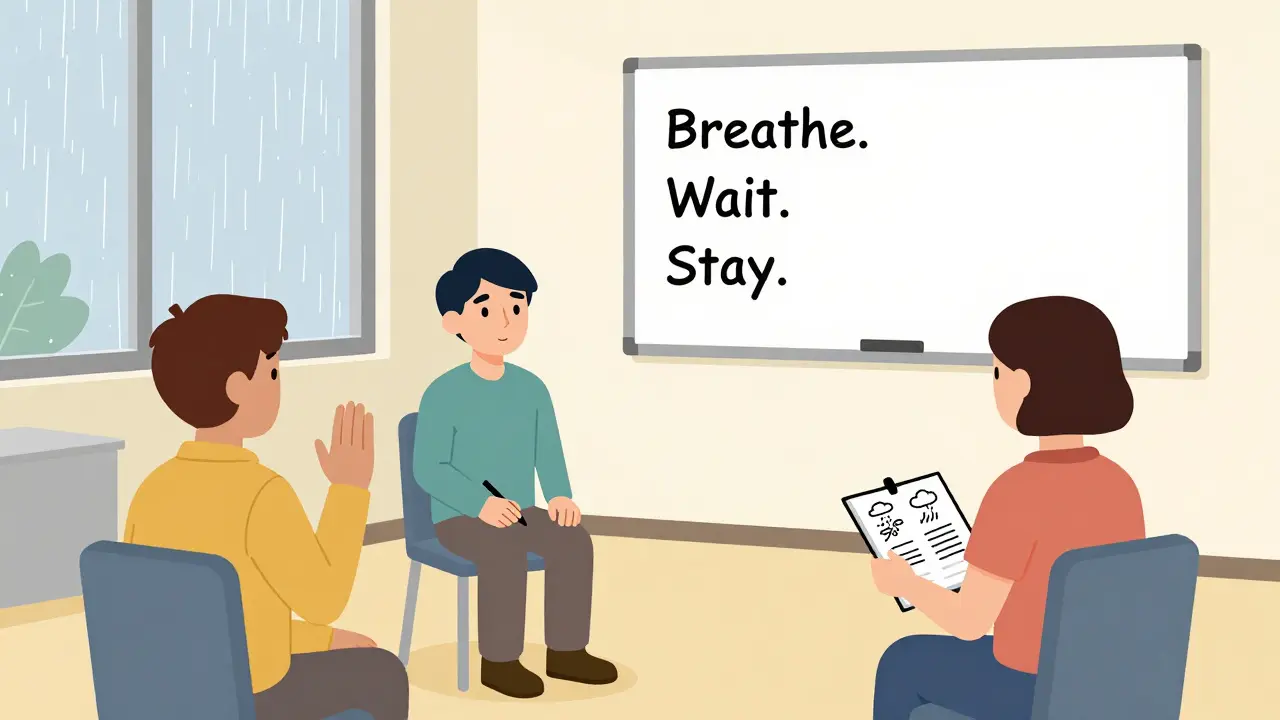
Programs like the one at Klecany don’t dive into deep psychology. They teach practical tools:
- Stanovení hranic: “I will not stay on the phone after midnight.” “I will not answer texts during work hours.”
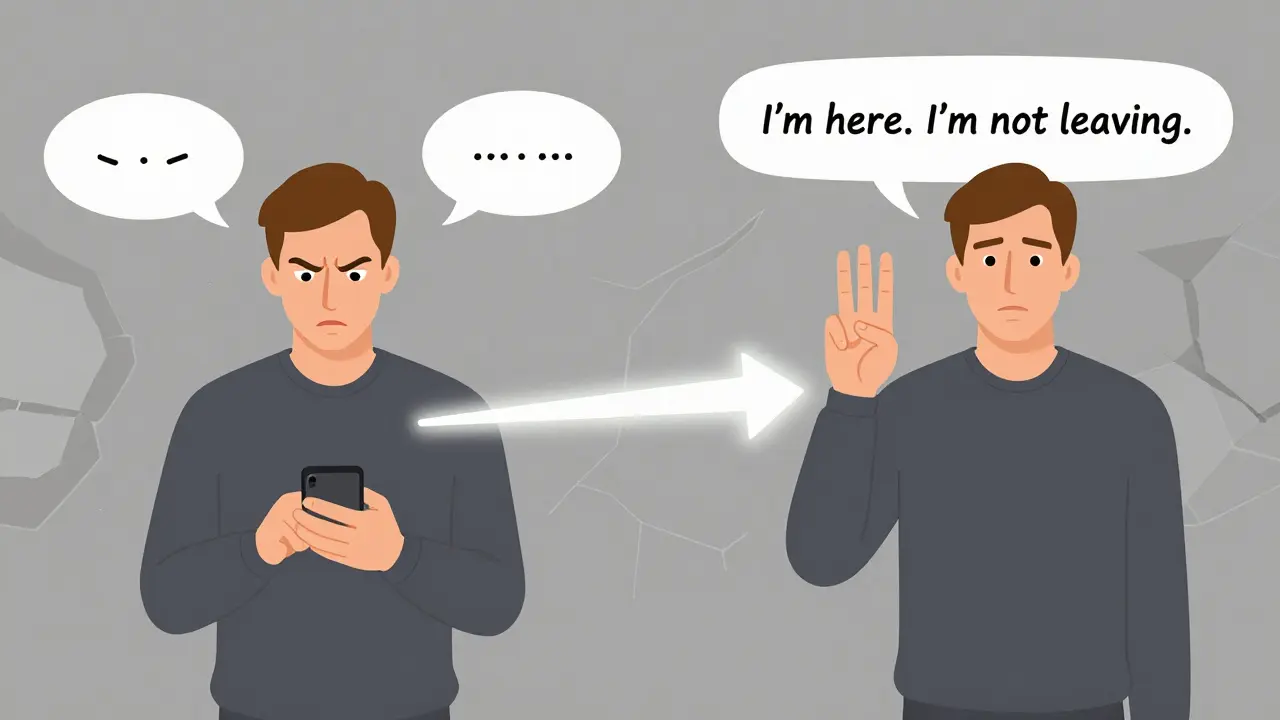
- Deeskalace: Using calm tone, short sentences, no arguing. “I’m here. I’m not leaving. But I need space right now.”
- Emoční karanténa: When the crisis hits, the partner steps away - not to punish, but to avoid reacting emotionally. They return only when calm.
- Pozorování vzorců: Noticing triggers: a delayed text, a perceived slight, a change in tone. Learning to name them before they explode.
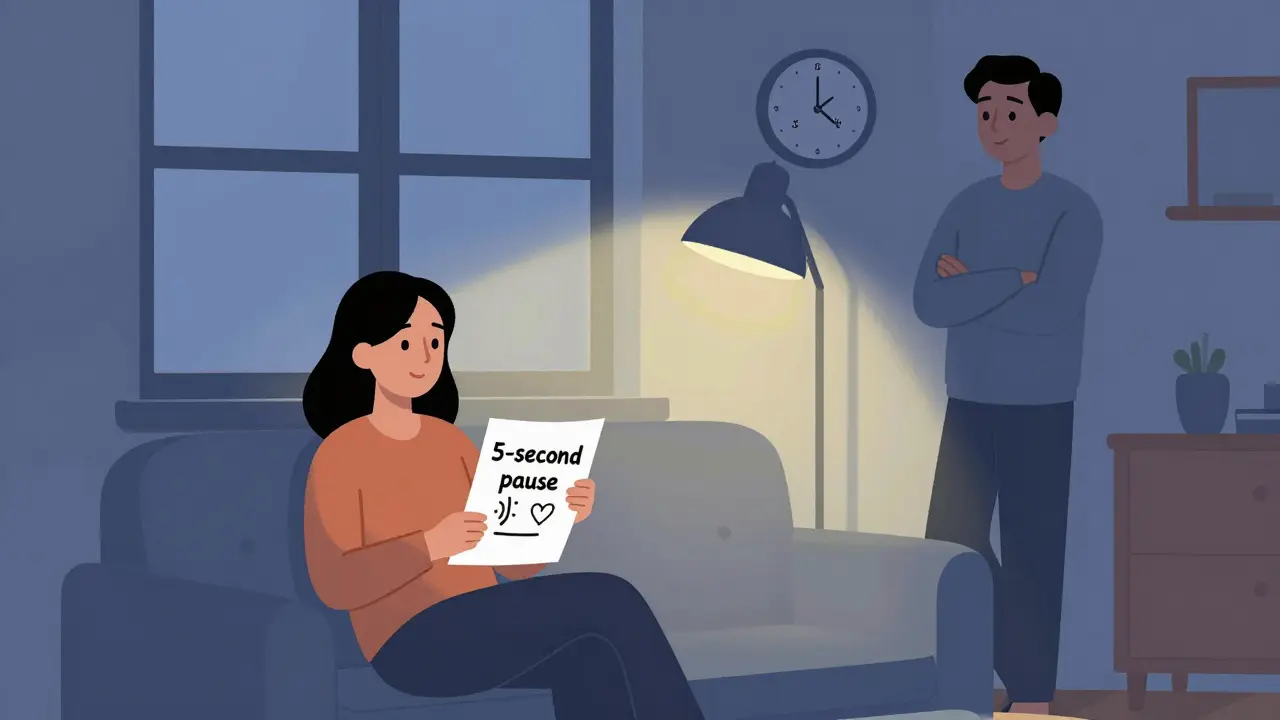
Free resources exist too. Lifecoaching.cz offers a downloadable e-book called “Láska na hranici” with 12 concrete strategies. One technique? The “3-second rule.” Before replying to a heated message, count to three. Ask: “Is this reaction helping or hurting?” Most people never pause. That pause changes everything.
Co říkají odborníci?
Mgr. Kristýna Škardová from Brno, who’s been working with BPD clients since 2015, says: “The partner’s involvement is valuable only if they can hold their own boundaries and aren’t caught in the negative patterns.”
PhDr. Jan Beer from Prague adds: “Success depends on whether the partner is willing to learn and apply these skills daily - not just during sessions.”
And the warning? “If the partner has unresolved trauma of their own,” says Psychologie.cz, “they might unintentionally retrigger the person with BPD. That’s why therapists must assess both sides.”
Co se mění v Česku?
The landscape is shifting. In 2018, only 147 therapists in the Czech Republic offered partner programs. Today, 62% of those specializing in BPD do. The number of therapists trained in this approach has grown by 35% since 2018. By 2025, experts predict 45% of therapists will include partners in treatment - up from 28% today.
New tools are emerging. Since January 2023, the National Institute of Mental Health has been testing a mobile app called “Hranice.” It gives partners real-time prompts during crises: “Breathe. Say: ‘I’m here. I’m not leaving.’” In a pilot with 85 users, crisis intensity dropped by 22%. Another project, launching in early 2024, will certify therapists in this method with 120 hours of theory and 80 hours of supervised practice. Finally, someone is building standards.
Co neřešíte?
Partner involvement doesn’t cure BPD. It doesn’t replace individual therapy. It doesn’t fix a relationship built on abuse. If your partner is violent, controlling, or refuses to take responsibility - no educational program will help. The goal isn’t to make the relationship perfect. It’s to make it survivable. To reduce the chaos. To give both people tools to breathe.
And if your partner refuses to join? That’s okay. You can still benefit. Many partners start with the 5-week course alone. They learn, they practice, they change how they respond. And that alone changes the dynamic. The person with BPD may not realize it - but they feel the difference. Calmer. Safer. Less alone.
Je to pro vás?
Ask yourself:
- Do you feel constantly drained, anxious, or guilty in this relationship?
- Do you avoid speaking up because you fear an explosion?
- Have you ever felt like you’re walking on eggshells 24/7?
- Do you want to help, but don’t know how - without losing yourself?
If you answered yes, then this isn’t about fixing your partner. It’s about protecting yourself. And maybe, just maybe, giving your relationship a fighting chance.
Start with the free 5-week program at Národní ústav duševního zdraví. No referral needed. No diagnosis required. Just show up. Learn. Breathe. Then decide.
Je zapojení partnera do terapie stejné jako vztahová terapie?
Ne. Vztahová terapie se zaměřuje na řešení problémů ve vztahu jako celku. Zapojení partnera do terapie poruchy osobnosti je edukační a zaměřuje se na to, jak partner pochopit a reagovat na specifické chování osoby s poruchou - ne na to, jak „vzájemně vyřešit“ konflikty. Partner není terapeutem, ale učedníkem.
Může partner sám mít poruchu osobnosti a stále být zapojen do terapie?
Možná, ale jen s velkou opatrností. Pokud partner trpí vlastní poruchou osobnosti - například narcistickou nebo hranicovou - může jeho zapojení zhoršit situaci. Terapeut musí nejprve vyhodnotit, zda partner má vlastní potřebu terapie. Pokud ano, je vhodnější začít s individuální léčbou, až poté přemýšlet o společném zapojení.
Je zapojení partnera vhodné v akutní fázi poruchy?
Ne. V akutních krizích - kdy pacient prožívá silné deprese, sebedestruktivní chování nebo psychotické epizody - je partnerův přítomnost často kontraproduktivní. První krok je stabilizace pacienta individuální terapií. Partner může být zapojen až poté, kdy je situace stabilnější a terapeut hodnotí, že partner má dostatečnou emocionální odolnost.
Jaké jsou nejčastější chyby partnerů, když se zapojují do terapie?
Nejčastější chyba je přílišná empatie - partner se „přidává“ k emocionálnímu stavu pacienta, místo aby ho uklidňoval. Další chybou je zanedbání vlastních hranic. Někdy partneri začnou používat naučené techniky jako nástroj pro kontrolu - například „nemluvím, dokud se neuklidníš“ - což vytváří další manipulativní vzorec. Poslední chybou je očekávání změny: partner čeká, že „když se naučím, on se změní.“ To není pravda. Změna přichází jen od pacienta. Partner mění jen svou reakci.
Kde mohu najít edukační program pro partnery v České republice?
Nejznámější je 5-týdenní program Národního ústavu duševního zdraví v Klecanech, který probíhá každý úterý od 17:30 do 19:30. Další možnosti nabízejí terapeuti v Brně a Praze, například Mgr. Kristýna Škardová nebo PhDr. Jan Beer. Některé programy jsou placené (od 499 Kč za hodinu), jiné - jako ten v Klecanech - jsou zdarma. Informace najdete na stránkách NUDZ nebo na Terapie.cz.